Saturday, January 30, 2016

Lessons from My Favorite Characters, Chapter 1

As an avid reader and film-watcher, an aspiring writer, and a human person, I, like many others, find character analysis fascinating. The list of characters that I admire and love is a long one; but in a series of blog posts I hope to name a few of them. As of late, I've been reading about and re-watching the movies including some of my favorite female characters, so I thought I would start with them.

1. Molly Mahoney (Mr. Magorium's Wonder Emporium, film)
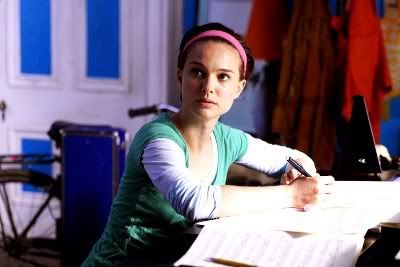
http://i114.photobucket.com/albums/n246/sicrowe/7_G_sized.jpg
Mahoney was not an instant favorite. I remember that I was more confused than impressed by the movie the first time I saw it. I imagined it would be a typical funny children's movie when I saw it for the first time (I was around age 12 or 13, I think). But, a few years later when I watched it again, I was deeply touched and stirred by several of the deeper themes and messages that the movie communicated.
As time has gone on, I have found myself relating to Mahoney in many ways. I have even described her as one of the characters that I relate to the most.  She's looking for something more.  She knows that she has talent; but she's looking for a way to use it. She wants to grow, but doesn't really know how to.  She's reluctant in the face of change.  She's not afraid to reach out to people (even misfits like Eric). I love watching her character grow in the film. But allow me to elaborate further.

"When she was younger, everyone thought she was a musical genius, a brilliant pianist, and she believed them. But now, as she became a grown up, she wasn't so sure. I'm not sure why grown ups don't believe what they did when they were kids. I mean, aren't they supposed to be smarter? What Mahoney needed was an opportunity to prove to herself that she was more than what she believed." 

Like many, Mahoney experiences doubts about herself and her abilities.  She wants to do something great, but she isn't sure that she can, and if she can how she will.

"May I suggest you stun the world with Molly Mahoney's First?"
"I want to. But I am stuck." 


She wants to believe that there is more to her than meets the eye. But she's not sure if it's true.  So she goes looking for answers.

"Mutant, when you look at me, what do you see?" 
"Really pretty eyes?" 
"*laughter* No. That's not what I mean." 
"What do you mean?" 
"Do you see a sparkle?" 
"You mean like glitter? On your face?" 
"No. I mean, like...a sparkle."
"Like what kind of sparkle?"
"Like something reflective of something bigger that's trying to get out." 


How amazing. I can't tell you how many times I have wondered about this. When people look at me, what do they see? Do they see the kind of sparkle that Mahoney is talking about? Something more that's trying to get out? How do I find it? How do I let it loose?

What's amazing about this movie is the way that Mr. Magorium and others show Mahoney how she does not need to change her circumstances or change who she is in order to become who she's supposed to be.  Rather, what is necessary is that she has faith in who she is and acts out of that.

"What you need to believe in is not the store, it's not the cube, it's not me. What you need to believe in is you...Holy cow."
"What is it?"
"A sparkle." 


I think perhaps another reason I love Mahoney so much and I find myself relating to her is that the things that Mr. Magorium (and others) say to her have been words I needed to hear.
For instance:
"We breathe. We pulse. We regenerate. Our hearts beat, our minds create, our souls ingest. 37 seconds well used is a lifetime!" 

"Your life is an occasion. Rise to it." 

But I also love her zest for life and her ability to see the world for more than its outward appearances.

"You're a 'just guy.'" 
"What's a just guy?" 
"A guy just like you, same hair, same clothes, same shoes, who looks around and, whatever he sees, he thinks: 'Oh, it's just a tree...it's just a store...it's just a bench.' It's just what it is, nothing more." 
"But this...is just a toy store."
"I'm sure to you it is." 


She's not satisfied just looking at the outward appearances of things. She's fascinated by the deeper meaning; the soul of the thing, if you will.  What makes it what it is? Why do I find this attractive? I like her inquisitiveness and her sense of humor. The story is about Mahoney's journey to become who she really is. She thinks, in the beginning, that this means moving on from her job and the things that she loves (writing music, the store, etc.).  But her friends, in time, show her that this is not what she ought to do. Rather, she needs to embrace who she is and apply herself, with all of her talents and dreams, to this task that she is completely capable of doing if she believes that she can and acts on that belief. Mahoney's character has a depth to it that makes it so interesting every time I analyze her a bit more.  She's not a character that you can understand just by skimming the surface.  I think that's true about the entire film, which may be why I love it so much. If you have not seen this movie, I highly recommend that you do.

2. Josephine (Jo) March (Little Women, film (1994))

https://louisamayalcottismypassion.files.wordpress.com/2010/10/jo-march.jpg
I love Jo for her spunk, imagination, humor, and pursuit of her dreams.  Her aspirations to be an author are also something I can relate to, as writing is a particular hobby that I am very fond of (though for Jo it's hardly a hobby).  Her love of her home and family also are incredibly relatable. It's no surprise that this is the movie I watch when I am missing home since it reminds me very much of my family, especially my sisters.  Of the March sisters, Jo is probably the one I relate to the most.  Her imaginative and wild spirit appeal to me in so many ways; and her stubbornness and frustration are also very relatable. Jo's story is also one of journeying, which is why I love it so much, I think.

Jo delights in writing thrilling stories, which, for most who have pursued writing fiction, is relatable. But, as her character grows, she learns that is not so much what she likes that she should write about. Her friendship with Friedrich shows her that.  Her writing should flow from who she is as a person, from her life experiences.  "There is more to you than this, if you have the courage to write it," he tells her. It's a challenge in a way. It's outside of Jo's comfort zone, and she feels as though he should be proud of her because she is succeeding as a writer of these thrilling stories. But Friedrich sees more in Jo. He knows she has the ability to write well. But he also knows her as a person, and he does not see much of who she is as a person communicated in her writing. He calls her out of her comfort zone and challenges her to be more than what she already is.

I also admire Jo's struggle to find where she belongs.

"Of course Aunt March prefers Amy over me. Why shouldn't she? I'm ugly, and awkward, and I always say the wrong things. I fly around throwing away perfectly good marriage proposals. I love our home but I'm so dreadful that I can't stand being here! ...I'm sorry. I'm sorry, Marmee. Something's really wrong with me. I want to change, but I can't. And I just know I'll never fit in anywhere." 

How easy it is for us to find ourselves feeling the same way. Especially when, throughout life, we have been independent, strong-willed, creative, or just natural loners.  But I love how Marmee responds to Jo in this moment of internal (and external) struggle and discouragement:

"Jo, you have so many extraordinary gifts! How can you expect to lead an ordinary life? You're ready to go out and find a good use for your talent...Go, and embrace your liberty, and see what wonderful things come of it." 

Our individuality should never be something that we are ashamed of, that we try to suppress and get over.  Jo knows this. But at the same time, she can't help being discouraged by a world around her that seems to shut down her spirit and urge her into a kind of life that she does not want.

I could go on talking about Jo and this movie for a long time (in the near future, I plan on giving some analysis of her romance story); but for brevity sake, and in order to introduce two more of my favorites, I will leave it there for now.

3. Anne Shirley (Anne of Green Gables, Sullivan Entertainment)
https://maryloudriedger2.files.wordpress.com/2012/06/468x395_anne.png
Anne Shirley. Bright, romantic, imaginative, dreamy, ...hot tempered, and stubborn. Anne is one of my favorites for how real she is.  She does not try to hide her faults.  Rather, she becomes aware of them and tries to overcome them: "I never make the same mistake twice." 

When Anne first comes to her new home in Avonlea, she sticks out like a sore thumb. Not only is she odd because she's an orphan, but her wild imagination and dramatic language take many of the simple folk of Avonlea by surprise, and people are quick to dismiss what they don't understand.  Hence, Anne's reflective thoughts and dreamy reveries are usually dismissed by those around her as childish nonsense.  Anne's is the story, if you will, of the oddball who finds her way in a town of "normal" people. (I say "normal" because, personally, I'm convinced there's no such thing.) 

But, I think some of the greatest lessons I learned from Anne are related to romance.  Of course, no conversation about this would be complete without mentioning the beloved Gilbert Blythe. 

https://images.duckduckgo.com/iu/?u=http%3A%2F%2Fanne.sullivanmovies.com%2Fwp-content%2Fuploads%2Fsites%2F2%2F2012%2F11%2FAnne-and-Gil-talking.jpg&f=1
Ah, Gilbert...handsome, charming, kind, and what a gentleman (in the truest sense of the word).  But another great quality of Gilbert's is his honesty.  He's not content to just praise Anne's writing and give words of encouragement (though he does offer these at the moments when they are needed). Rather, he challenges Anne. He knows there is more to her and that she can write greater stories than the romantic fairytales that she's given so much time and energy to.  

"Take the $50 and write a story about the people you care about, right here in Avonlea!" 

to which Anne replies sharply: "Well you certainly wouldn't be one of them!" 

Anne's romantic fantasies get the best of her in Anne of Green Gables: The Sequel.  She has an idea in her mind of what romance should and does look like.  In her mind, it is a dashing, dark, melancholy man coming into her life and sweeping her off her feet with poetic words.  This idea of hers is indirectly contested when her best friend, Diana Barry, marries the simple and kind Fred Wright of Avonlea.  Diana, like Anne, had entertained fantasies of a tall, romantic young man coming into her life and romancing her.  Now, she seems to have let those fantasies go for the reality of Fred; but she tells Anne: 

"I'm really very happy! Though it does seem ridiculous for me to be marrying Fred. But he's got a good heart; he's so thoughtful." 

Anne refuses to let go of her ideals in spite of this.  So tightly does she hang on to them that she flat-out refuses Gilbert.  She seeks adventure elsewhere, away from the simplicity of Avonlea.  In her adventures, she comes into contact with a man who seems to embody her romantic ideals: Morgan Harris, a rich, young widower with a troubled past.  

https://images.duckduckgo.com/iu/?u=http%3A%2F%2Fmedia-cache-ak0.pinimg.com%2F736x%2F90%2F88%2F3d%2F90883d29c7918cf1545f5bacbac3a076.jpg&f=1
Anne is, eventually, starstruck. As is Morgan Harris.  But, in the moment where Morgan proposes to Anne, Anne finally seems to see through the haze of the romance of novels, and she sees more clearly what is the kind of love that leads to strong marriages.  She refuses. She comes close to reconsidering, but she realizes that there's something not right about marrying Morgan Harris.  I think that, at this moment, finally Marilla's words get through to Anne:

(speaking of Gilbert) "Anne, you have tricked something out of that imagination of yours that you call romance. Have you forgotten how [Gilbert] gave up the Avonlea school for you so that you could stay here with me?  He picked you up everyday in his carriage so that you could study your courses together.  Don't toss it away from some ridiculous ideal that doesn't exist." 

I don't think Anne fully realizes just yet that she loves Gilbert and that's the reason why she turns down Morgan. I think what happens is that Anne finally sees the truth about love.  It's not fireworks and sailing ships and ballrooms...it's the little sacrifices, the acts of kindness, the challenges.  And, through that, Anne begins to realize that she loves Gilbert for all his kindness, his humor, his genuineness, and for all the ways that he wants her to become a better person (and he wants to help her do that).  Honestly, this love story is one of the best in film that I have seen! I could go on and on about it. But then we wouldn't have time for number 4.  

4. Gloria Dump (Because of Winn Dixie)

https://s-media-cache-ak0.pinimg.com/736x/f2/9e/8f/f29e8f929e40ef005b23846533df732a.jpg
If you're seeing a theme here that I seem to like really complex characters, I think this one should dispel that a little. Gloria is not really a complicated character. We don't know a whole lot about her, but that doesn't change the fact that her simple words of wisdom have a lot of power and have had true influence on me. From something as simple as the "wait-and-see tree" to something as powerful as the "tree of wrongs," Gloria has some amazing life lessons to offer. Even her name is reflective of a deeper truth.  Gloria Dump. It's an odd name.  But think about it. Gloria! The cry of the angels announcing the coming of Jesus into the world.  Then Dump, which reminds us of a garbage heap.  But, think about that.... I think a lot of us see in ourselves some sort of garbage heap and we doubt our worth because we are so broken.  Yet Christ reaches out to us there and can pull us out of all the garbage and lies that we tell ourselves, or that the world and the devil whisper to us.  So amid the dump, there is glory: the glory of Christ. 

One of the things I like most about Gloria is her ability to listen. She's mostly blind, so she asks Opal a favor: 

"Why don't you tell me all about yourself so I can see you with my heart?" 
"I had been waiting so long to tell someone about myself, I couldn't stop! I told Gloria Dump everything...and the whole time I was talking, Gloria Dump was listening. ...I could feel her listening with all her heart. And it felt good." 

Something simple, true enough. But profound. I remember hearing that line in the movie and knowing in my heart how good it felt when someone listened to me, really listened.  I decided then that I wanted to be that kind of listener.  I haven't always been successful, of course. But I'm reminded often how important it is to listen to someone, not just with your ears, not just to respond, but to listen to understand and to listen with love.

Gloria also teaches Opal about how we should look at other people.

"But you're not a bad person."
"Doesn't mean I haven't done bad things...Oh, baby girl, you know a lot of folks have problems with liquor and beer, get to started drinking and can't get stopped." 
"Are you one of those people?"
"Yes, I am. But you know something? These days I don't drink nothing stronger than coffee." 

"Did the whiskey, and beer, and wine, did they make you do all those bad things that are ghosts now?"
"Some of them. Some of them I would have done anyway, with or without the liquor and the beer. ...Till I learned."
"Learned what?"
"Till I learned what was the most important thing."
"What was that?"
"It's different for everyone. Gotta learn it on your own. But you know, we should judge Otis by the pretty music that he makes, and how kind he is to all them animals, because that's all we know about him now. Right?"
"Yes, ma'am." 


This reminds me of a philosophy that St. Therese of Lisieux had. She believed that we should spend more time looking at people's virtues rather than their faults; after all, their virtues are far more beautiful! This doesn't mean feigning ignorance, of course, or denying that people have ever done things that they shouldn't.  Rather, it is a matter of seeing with the eyes of God: when God sees even the greatest sinner, He sees His beloved child, whom He has such grand dreams for.  But He also sees the ways that they have broken His heart. He cannot pretend that those are not there.  That is against His nature.  But He is always ready to forgive, as we should be, too.  And it is a far greater thing to love the sinner than to condemn him, and to look for what is good in them rather than to criticize them for what they've done wrong.  "Because that's all we know about them, right?" For me, this has been a concrete example, also, of what the "judge not" verse in the Bible that people quote all the time actually means.  We are not to judge persons; but we may judge actions.  Why? Because we can know that actions are wrong.  But persons are more complex than that: they may not know the action is wrong, or they may not realize just how wrong it is. There are so many factors that we cannot know from the outside. But God sees the heart.  He's omniscient.  As such, He alone is the just judge because He is the perfection of justice and mercy. But, in order to live righteously, we need to make judgments of actions: is this action right and, therefore, going to help me to get to heaven? Or is it wrong and going to lead me away from God?

As a result, I have learned to do my best to see the best in others, and to give them the benefit of the doubt until I am proven wrong.  That doesn't mean that, if I'm proven wrong, I consider them unworthy of love or mercy. Rather, it helps me to make good judgments about how to love them and how to continue to be a disciple of Jesus when I'm around them, never in a way that makes them feel bad (that is, not a "holier-than-thou" attitude), but hopefully in a way that makes them want to be His disciples, too.

Another great lesson from Gloria comes nearer to the end of the movie.

"You cannot hold on to anything that wants to go, do you understand what I'm saying? You've just gotta love it while you've got it, and that's that." 

This has meant different things for me at different points in my life.  But lately, it's meant not trying to hold on to something that is flowing away according to God's design.  That doesn't mean being passive about it, but having a realistic view of the situation.  There are things that come into our lives only for a short time and then they go out of it, whether it's people, places, or things.  Our job is to pay attention to the grace of God in those moments and how He is using those things in our lives in the present moment. Those things that help us to grow in holiness we should hold on to. But those things that, if we try to hold them so tightly, pull our attention away from Him, it's time to let those things go.

I hope you find my reflections at least amusing if not informative. I have enjoyed writing this post, and will probably be writing more like it in the future.  But I hope that these characters now inspire you, even just a little bit, to become more the person that God made you to be and to let His light shine through you into the world.  God bless!

"For I know the plans I have for you, says the Lord, plans to prosper you and not to destroy you, plans to give you a future and a hope" -Jeremiah 29:11

Thursday, May 7, 2015

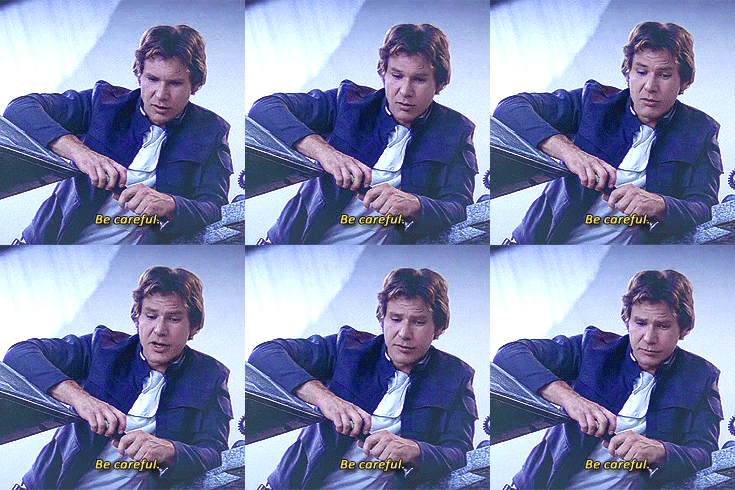
Captain America: The Righteous Man

Avengers: Age of Ultron is finally in the theaters! Watching it on opening weekend was definitely exciting (if a little pricey), and it was a most enjoyable movie! If you haven't seen it yet, I highly encourage you to do so.

Of course, as the newest Avengers movie comes out, those "favorite Avenger" conversations are bound to arise.  Where do I stand? Well....


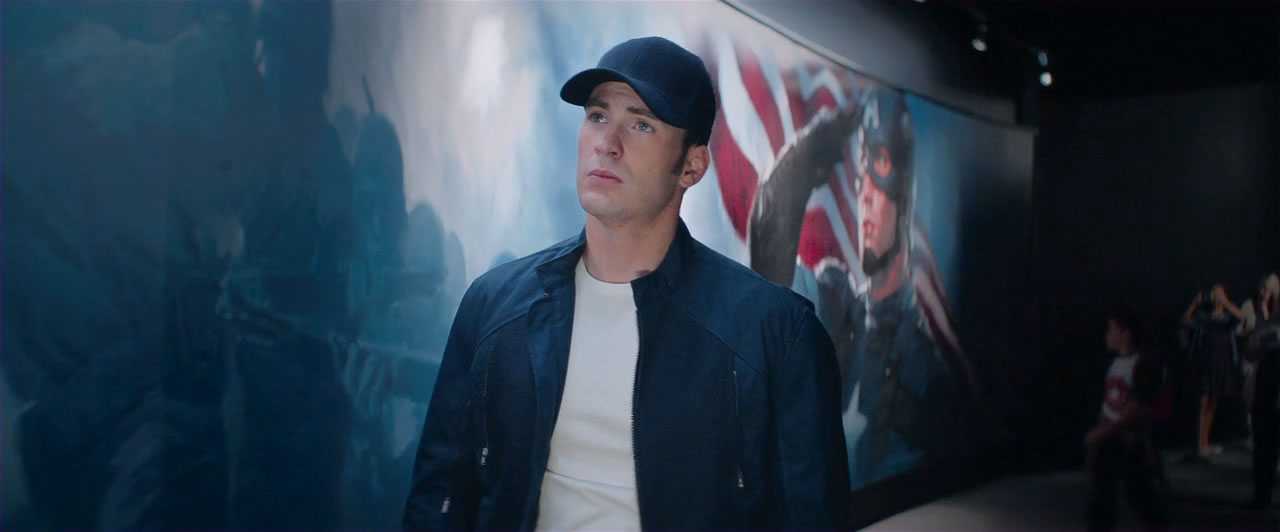
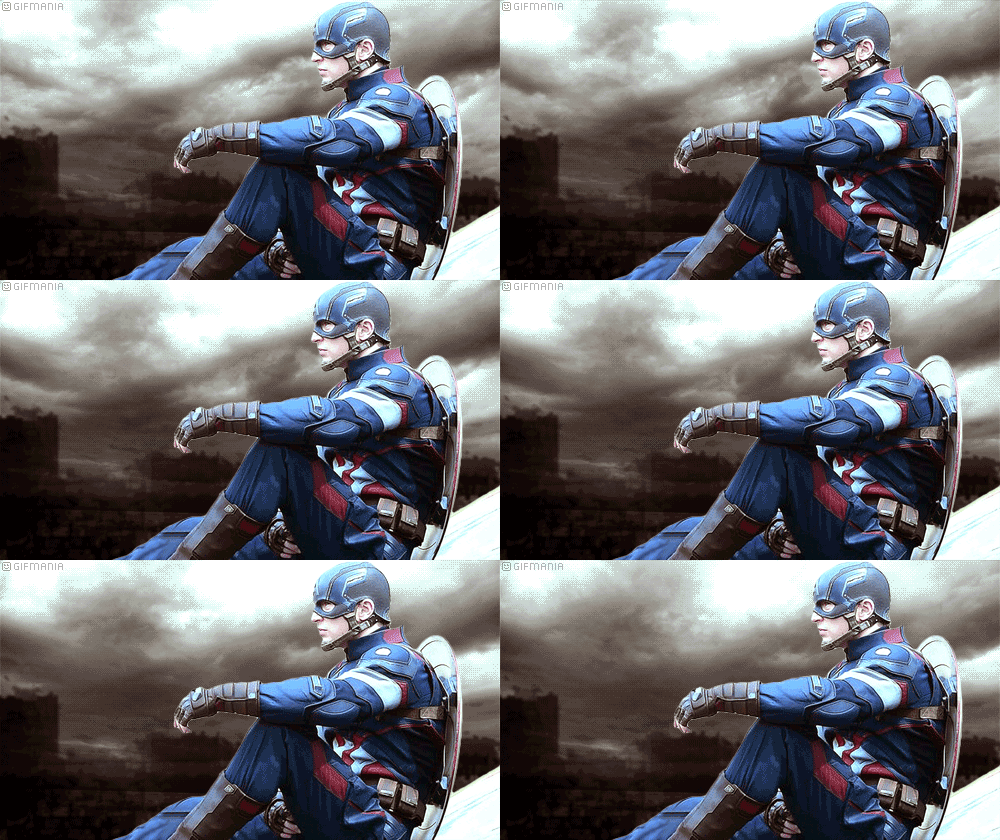
There's not much question here. I knew absolutely nothing about Captain America before I saw the first movie. The only time I had ever heard of him was the minor reference to him in "The Pursuit of Happiness."  But, when I finally saw the movie, I found myself pleasantly surprised by a superhero who wasn't stuck up, didn't think too much of himself, upheld doing the right thing, stuck by his friends in the tough times, and didn't back down from a fight even when he didn't have much chance of winning.  
Now, I know what you're thinking. I've heard it before. "He's too perfect." "He's not relatable." "He has no character growth because he already starts off good." I've even heard: "He's arrogant." (Now that one I take issue with. But we'll get to that.) 
I agree, there isn't a lot of character development, especially when you compare him to Ironman.  Ironman grows a lot in his three movies.  But I think people are too quick to dismiss Captain America from the "interesting characters" list just because they think he has no room for growth. From real life, we all know that even the people who look like they have it all together have areas to work on. I have to say that I think Marvel was hinting at this with Captain America in the new Avengers movie. 

*****SPOILERS****

When Captain America and Ironman are splitting logs, Ironman says he doesn't trust someone who doesn't have a dark side. Cap doesn't really make much of a response. What he was haunted with was his memories of Peggy, and the life he could have had with her. Granted, by the end he seems kind of determined not to let it bother him. But I think there might be more to it. I can't say I know what just yet, but I wouldn't dismiss Cap as having no struggles.   


********END OF SPOILERS*******

I also think that people are too quick to judge that Captain America has had an easy life. Let's remember what his life was like before Dr. Erskine discovered him. He was a puny kid from Brooklyn. He still stood up for what was right, but he took the hits that came with it. Before that, he lost his father and his mother. According to Marvel's Wikia, his father died when Steve was a kid, and his mother died when Steve was in his late teens, probably before he was eighteen.  (http://marvel.wikia.com/Captain_America_%28Steven_Rogers%29) Hardly sounds like a kid who's had life handed to him on a silver platter to me. But he was committed to doing the right thing and not letting tough times (or "tough people"/bullies) get him down. Like he said to Peggy: "You start running, they'll never let you stop." Even when it didn't make sense for him to put up a fight because he was sure to lose (like Bucky said: "You know, sometimes I think you like getting punched,") he didn't give up.  

One of my favorite parts of the first movie is when Erskine comes and talks to Steve before the procedure.  

"Can I ask you a question?"
"Just one?" 
"Why me?" 
"I suppose that is the only question that matters. ...The serum amplifies everything that is inside, so good becomes great; bad becomes worse. This is why you were chosen: because a strong man, who has known power all his life, can lose respect for that power. But a weak man knows the value of strength, and knows compassion."
"Thanks...I think." 
"Whatever happens tomorrow, you must promise me one thing: that you will stay who you are. Not a perfect soldier, but a good man." 
Steve raises his glass and says: "To the little guys." 


Steve was chosen for something more than physical characteristics or intelligence. He was chosen because he is a good man. I think the best way to understand the goodness of Captain America and his transformation into the super-soldier is this article: The Catholicity of Captain America.  
Erskine doesn't think Steve is perfect, and doesn't expect him to be. He wants him to just keep being himself: a good person.  There is nothing about Steve Rogers that would make anyone think that he could be a hero; they wouldn't even accept him as a regular soldier. At least, nothing on the outside. Nothing physical: no muscle, no outstanding intelligence, no knack for machines.... What makes him stand out from the rest is something much deeper than that: his virtue and sense of duty.  

Another area where I see a struggle of Captain America's is in the first movie. 

******SPOILERS*******
Captain America has just lost his best friend Bucky in a tragic accident on a train. He seems to have disappeared, and Peggy goes looking for him. She finds him in the shambles of a bar where Cap and Bucky and their friends would go to talk and have fun. 
Steve sits at a table, bottle nearby and glass in hand.  
"Dr. Erskine said that the serum wouldn't just effect my muscles, it would effect my cells. Create a protective system of regeneration and healing. Which means, um, I can't get drunk. Did you know that?" 
...
Peggy says, "It wasn't your fault." 
"Did you see the reports?"
"Yes."
"Then you know that's not true." 

Cap blames himself for Bucky's death, even though it wasn't his fault.  There really was nothing he could do. And Peggy tells him that Bucky's death was the death of a hero who thought his friend was worth dying for, and hardly something for Cap to take credit for (whether he means to, or not).  I think that's something a lot of us can relate to. When bad things happen, we're tempted to blame ourselves, even if there was nothing we could have done to stop it.  

*****END OF SPOILERS*******

As far as being un-relatable, I will agree that Ironman is slightly more relatable for most of us. At some point in our life, we've made a poor choice or many poor choices. Seeing Ironman rise from that, though, and become a better man is a journey that we all appreciate because it's one that all of us are on. It is also great to see Ironman, and the other Avengers, learn to use their abilities, talents, and skills for something greater than themselves, power, money, or whatever else they might be tempted to use them for. They make a choice to use their abilities to protect people.  
Nonetheless, I wouldn't dismiss Captain America as completely un-relatable. 


***********SPOILERS***********

In the new movie, for example. Ironman lets out a not-so-gentile word, to which Cap replies: "Language!" And he gets teased about it for the rest of the movie. Well, for some of us, that's definitely relatable. Some of us have definitely been the person to call out the person or group of persons on their language, and we can be ridiculed for it. It's not really a fun experience, though, as in Cap's case, it can be amusing. But the whole "we can't talk like this because of so-and-so" can be a little bit frustrating for the person doing the calling out. It's usually not about "don't talk that way in front of me" (though it can be); but it's about "you shouldn't really talk that way period." Of course, all of us let slip a word every now and then that we're not so proud of. I'm not condoning that; but it is the human condition. So don't rant on me about judging people by their language because I've heard it before. It's not that the language offends my ears so much as it offends your mouth and it offends the One Who made that mouth to speak words of truth and blessing.  

**********END OF SPOILERS***********

I also find Cap relatable in his desire to do what's right. I think part of what makes Cap such a valuable asset to the Avengers is not just his knowledge of war tactics and ability to take the lead and strategize while in the line of fire; but also his integrity. Cap is a soldier out of the 1940s. While not all the practices of World War II may be heralded as the most morally sound, it was a just war. The soldiers in that war were fighting for peace and justice; they fought against oppression and injustice towards weaker states, and the evils of the Nazi regime.  I believe that in the '40s there was a higher moral code among people than what we have today.  Moral relativism wasn't as rampant then as it is now, and so people had a clearer idea that there was right and there was wrong.  Cap is out of that era, and he holds himself to a higher moral standard than the average person these days. That's what makes him a valuable asset to the Avengers.  He holds everyone to a higher standard than "getting by." I love Tony Stark's snarky comments, and his response to Captain America in "The Avengers," about "cutting the wire" is clever. It's what we would all like to do, and, morally speaking, what is a good thing to do if you can. However, when you don't know if you can do that without the other person dying, there are people who hold themselves to that higher standard and who will, like Cap says, "lay their life down on the wire and let the other guy crawl over them."  Sacrificing your life for someone else, when there's no other way for you both to get out alive, is heroism. 
I'm not putting Stark down by that, either. He does sacrifice himself in "The Avengers," thus proving Cap and anyone else wrong about him. He has a heart, and a conscience. He can make the sacrificial act. Finding the way around it is great when you can; after all, one of the natural goods we strive after as human beings is self-preservation.  But there are times when you can't "cut the wire."  Cap holds the Avengers to a higher standard than "cutting the wire," or "doing just enough."  It's about doing what's right, as it ought to be. That's what heroes do. They make mistakes; but, it's what they do after those mistakes that matters.  As Fulton Sheen said, "There are two kinds of people: a person who falls down and stays down; and a person who falls but who gets back up again."  The Avengers are heroes because they get back up again.  They aren't heroes because they never fall; they're heroes because they don't let that fall be the end. 


I really enjoyed how the Avengers sort-of nickname for Cap is "old man."  Even though he doesn't look like it, he is older than all of them. He's seen a totally different century, a different kind of war, a different kind of America than the rest of the Avengers.  He's got a mentality like Samwise Gamgee: "There's some good in this world, and it's worth fighting for."  Even when things look bleak, he's determined to keep doing what he knows he should do; not what is easy, not what reaps the most benefit for everybody, but what is right.  It's people like that who make us all want to be better.  I think part of the reason why some people don't like Captain America is that he's the kind of person who holds you to that higher standard.  A lot of us are in the "getting by" mentality instead of the "excellence" mentality, and we get intimidated or defensive when people call us on to be more than what we are.  But we need those people. We're not perfect, and we know it. But we can't work on our imperfections and become better if no one points them out to us, or if no one shows us how to be more than "the sum of our weaknesses," as St. John Paul II called it.  

A dear friend, and fellow Avengers analyst said this to me when she heard about the blog post I was writing: "[Cap]'s almost like playing Jesus -- he's "good." He's almost like good incarnate. That makes him the hardest of the Avengers to play, and Chris Evans does a beautiful job!"  


Another great thing about Captain America, though, is that I don't see him looking down on others because they don't hold them to that higher standard.  "Avengers" is the movie where he's learning to balance holding himself to that higher standard and expecting others to do the same with acknowledging and understanding the struggles and imperfections of his teammates.  In the end, they work through those differences.  They learn to work with each other's strengths and help each other in their weaknesses.  A great example of this is in "The Winter Soldier."  

************SPOILERS*************** 

Cap and Black Widow have just come to Falcon's house to hide out because they're on the run from S.H.I.E.L.D./Hydra.  (And, can I say, I love Cap's response to Project Insight: "This isn't freedom. This is fear."  In our fallen state, the two exist together. But when we let fear take control of us, we lose our freedom.) 
Nat is sitting down, looking thoughtful.  Cap comes in and asks her if she's okay. She casually replies that she is; but Cap is persistent and gets her to tell him what's on her mind. 

"When I first joined SHIELD, I thought it was going straight. But I guess I just traded in the KGB for HYDRA. I thought I knew whose lies I was telling, but... I guess I can't tell the difference anymore."
"There's a chance you might be in the wrong business."
"I owe you."
"It's okay."
"If it was the other way around, and it was down to me to save your life, and you be honest with me, would you trust me to do it?"
"I would now. And I'm always honest."
"Well, you seem pretty chipper for someone who just found out they died for nothing.?
"Well, I guess I just like to know who I'm fighting."
Cap is learning to trust his teammates. It's not always easy. He knows their imperfections, for example: Natasha's not afraid to trick people and tell lies if she has to. That makes her good at her job, but what's the guarantee that she's not lying to her friends, too? Nick Fury is the man in charge. He calls the shots, and he's good at it. But he's also afraid. He doesn't trust people, and that makes is hard for Cap to trust him. But because of what they've been through, Cap learns to trust Nat and Fury. 
"All you can do's try to know who your friends are as you head off to the war." -The Call by Regina Spektor.

************END OF SPOILERS**********


I don't think that Captain America is flawless, as I made clear before. But I think that he is a very good image of the righteous man. The righteous man is a man of the Beatitudes, a man of virtue, a man who wants to do what is right no matter what. Captain America is that kind of man. This makes it, sometimes, a bit awkward for him because the rest of his team is often in a different mindset. But, for those striving for righteousness in their lives, Captain America can be someone they really relate to. You stand for what's right, and sometimes people beat you down for it. They might actually admire your convictions, but it doesn't show very much. Still, affirmation or no affirmation, you know what you have to do and you don't let what's popular get in the way of that.  

You might retort and say: "Well Cap goes against his principles and says a bad word or two later in the movie."  Yes, and we all have had those moments where we failed, right? Where we abandoned principles to fit in? And sometimes a word slips. Cap is also a World War II soldier, and I'm sure that it wasn't the only time that a cuss word has crossed his lips. But, compared to some, he keeps it pretty clean.  I'm not saying Cap is perfect. I'm saying he's exactly what Erskine called him: "A good man." 

The righteous man is a figure in many books of Scripture, especially Proverbs. But I think these two Bible verses summarize best what I love about Captain America. 

Can a mortal be more righteous than God? Can even a strong man be more pure than his Maker? -Job 4:17

But you, man of God, flee from all this, and pursue righteousness, godliness, faith, love, endurance and gentleness. -1 Timothy 6:11 

"Those who lead many to righteousness." Sounds like Cap to me. He's determined to do the right thing, and, as the main leader of the Avengers, he leads them all to do the same (so far as he is able).  Cap doesn't lord his strength over anyone. Like Erskine said, he knows compassion. He knows the value of the strength that he has because he's been on the other end of a strong man's punches.  He uses his power for good.  He doesn't pretend to be more than what he is, and he's not one to look for attention.  
Cap's famous line from "The Avengers" is: "There's only one God, ma'am, and I'm pretty sure He doesn't dress like that." I think that the verse from Job sounds a lot like something that Captain America would relate to. He doesn't consider himself to be perfect. He's strong, but he's humble about it. He doesn't flaunt his strength or use it imprudently. He uses his gifts for good, to help people. 
The verse from 1 Timothy is also really great, and it's an encouragement to all of us who feel like the Captain America in our circle: the one who stands for what's right, and isn't always esteemed for it (and sometimes is flat out ridiculed for it).  Flee from sin and temptation, and continue to pursue righteousness, virtue, godliness, endurance, and gentleness. Those are qualities that I see in Captain America. He has a determination to do what's right, and to keep doing it. He is a righteous man. He is a godly man (in the original comics, he's an Irish Catholic!). He has endurance. Even when everything gets difficult, he doesn't quit. But he's also gentle. He's a gentleman, first of all; and there's a genuine look of calm and kindness about him in some of the scenes where the action has died down, like when he's trying to help Black Widow sort through what's bothering her in "The Winter Soldier."  He values life, and anything that even threatens it he regards with a lot of caution. 
"Every time someone tries to win a war before it starts, innocent people die. Every time."
I think, in some ways, Captain America intimidates people.  They see his commitment to do what's right, and they know that this is what we all are supposed to do. It is often the case that when someone challenges us to be more than what we are, our first instinct is to defend our position, and sometimes to lash out at the challenger.  

But, when did righteousness become "arrogant?" When did virtue become "old fashioned?" When people became afraid of the implications of living righteously and virtuously. You're not always going to be popular. In fact, there will be a lot of times where people really don't like you. They see you as a threat to their position, their way of life, and they don't want to change the way they live, so they find fault with you.  I think perhaps some of the attacks on Captain America stem from that.  Chris Evans, the actor who plays Captain America, even says that Captain America is the everything that he wishes he could be. When we see where we fail, there are two things we can do with it: let it destroy us (and as a result we lash out and tear down others), or let it drive us. 

Captain America is my favorite superhero, and I don't see that changing anytime soon.  He really is the best of them. He's righteous, true, and good. He's committed to protecting people, and to doing what's right. This isn't arrogant; it's conviction. He knows what he has to do, and he'll make whatever personal sacrifices he has to in order to do it.  He is the righteous man; the good man; and we could use a lot more of those in the world we live in. 

"I know I'm asking a lot. But the price of freedom is high. It always has been. And it's a price I'm willing to pay. And if I'm the only one, then so be it. But I'm willing to bet I'm not." -Captain America, The Winter Soldier 

Fight on, soldier! Fight on!

Those who are wise will shine like the brightness of the heavens, and those who lead many to righteousness, like the stars for ever and ever. -Daniel 12:3


Friday, May 1, 2015

Star Wars VII and the Return of the Cynics

Before we get into the subject of the blog post, let me make a disclaimer: I don't hate cynics. It's good to have these kinds of people in our lives to help us take a reality check sometimes, or be realistic, or see the other side of a situation, or the more negative aspects of a topic...the list goes on. In fact, some of the movie characters I enjoy the most are cynics.
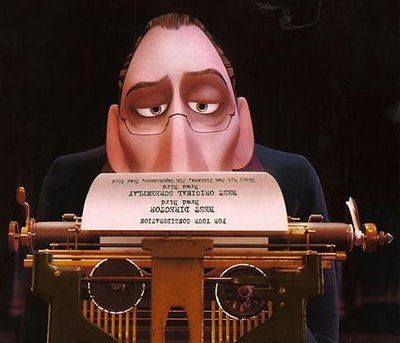
Case in point. Who doesn't love Anton Ego? 

Cue the music! STAR WARS!!! 
Yes, that's right! The official trailer for Star Wars VII is here!!! Watch it now! 
So let's go through a scene-by-scene analysis: 
(1) Lucasfilm Ltd. slowly fades in on a black screen. The excitement starts to build. How many times have you seen that logo before watching a great movie about a galaxy far, far away? 
(2) The music fades in. And the excitement/nostalgia increases. Not to mention, you get an awesome long shot of the Tattooine landscape, a familiar sight from "A New Hope." Looking good. Looking good. 
(3) Someone's zooming by on a speeder. What's that in the background? Oh, sweet! It's a Star Destroyer that crashed in the sand. That's cool! Fade to black. 
(4) Voiceover: "The Force is strong in my family." Close shot of the Darth Vader mask, pretty banged up and kind of deformed, but still distinguishable. Creepy but cool. "My Father has it." So it's Luke talking, which you may have already guessed, since this quote is in "Return of the Jedi." 
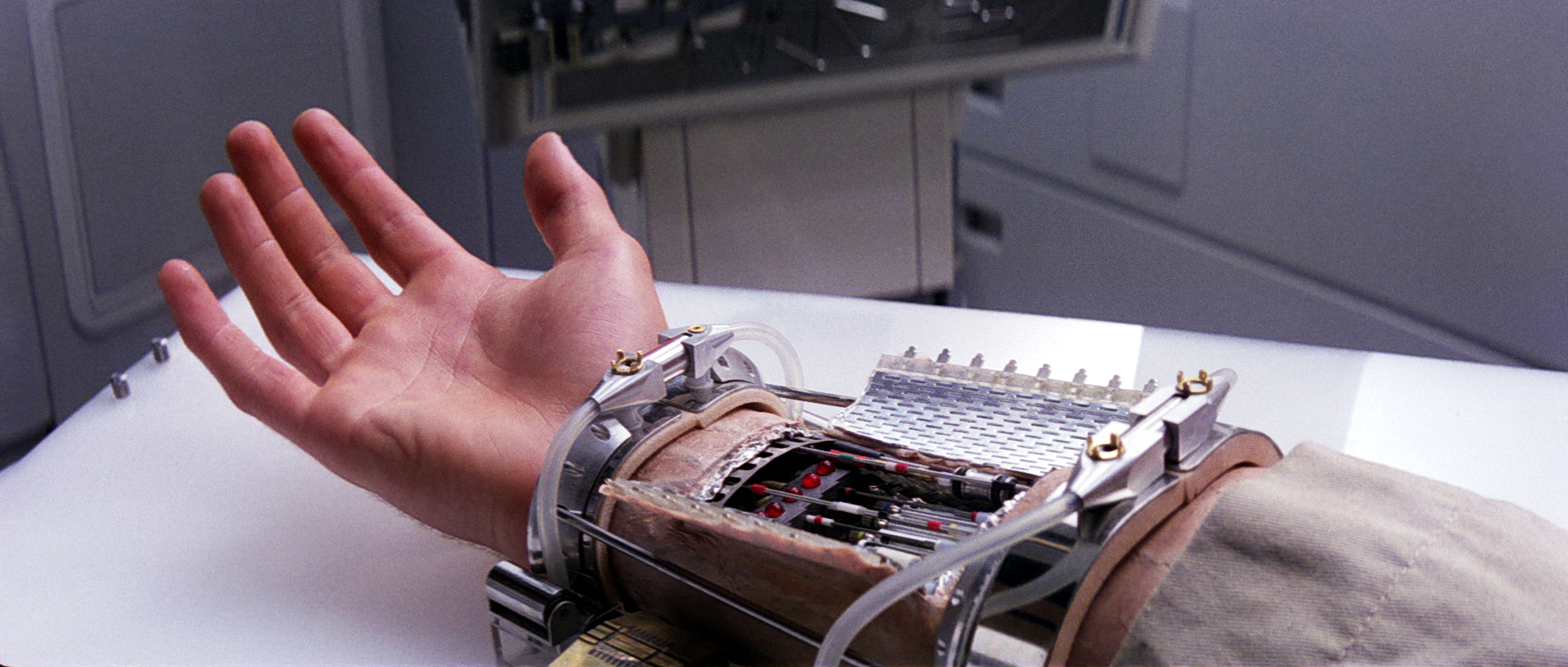
(5) Fade to black. Cut to scene of R2-D2, and a person in a black cape kneeling beside him. "I have it." The person reaches out and touches R2 with a mechanical hand. (A little odd, considering that Luke's prosthetic hand in Star Wars V actually looked very realistic.) 

(6) "My sister has it." Scene of a lightsaber being handed to someone. It looks like a girl's hands. All right. Is it Leia? Fade to black. 
(7) "You have that power, too." And the music builds to the dramatic theme that we all love while the magical words appear on the screen: "This Christmas...." Cue excitement and drumroll on the desk that I was sitting at when I watched the trailer for the first time. 
(8) Cue lots of action scenes giving subtle hints at the plot and content of the movie, culminating in the MILLENNIUM FALCON (AHHHH!) being chased by a TIE Fighter. Fade to black. 
(9) Voiceover: "Chewie..." Fade in (much older) HAN SOLO and CHEWBACCA, and Han says, "We're home," while grinning in that way that only Han Solo can. And add to that cheers and gleeful exclamations by me: "Oh my gosh!! YES!!!!" 
So there you have it. My reaction to the trailer for Star Wars, Episode VII: The Force Awakens. 
Now I consider myself an avid fan of Star Wars. I didn't see IV, V, and VI very early in my childhood, but once I did see them I was hooked. Han Solo was my favorite (obviously), closely followed by Luke and R2-D2. I loved the movies, collected the action figures, read whatever I could manage at that age (but, let's face it, chapter books that are 300 pages or so when you're not even in middle school yet can be a struggle), and even started writing a story of my own that took place in a galaxy far far away. 
I watched I, II, and III eventually, and I liked them, though not as much as IV, V, and VI. Over time, though, I did get more critical of I, II, and III and started thinking about why they just weren't as good. 
The Phantom Menace had some good points. Ewan McGregor as Obi-Wan Kenobi for instance. Qui-Gonn Jinn was also pretty cool, and I liked little-kid Anakin. Jar-Jar Binx was funny, but...well, he wasn't smart. Pod racing is cool, but...the Millennium Falcon is cooler. And the bad guys just weren't as interesting. The fight with Darth Maul was pretty awesome. But, all other things considered, it just wasn't all that good.

Attack of the Clones wasn't much better. Again, Ewan McGregor did a great job of keeping things interesting. Obi-Wan's investigation and encounters with Jango Fett were pretty cool, and he's got some great one-liners. Anakin and Padme's so-called romance, though, really killed it. Ugh...just...no. I'm sorry, George Lucas, but romantic films are definitely not your forte. Things got better with the Jedi Battle. Mace Windu was pretty awesome in that whole scene. But, apart from that...not a whole lot to be said.

Revenge of the Sith: The beginning made you think: "Oh hey, this is pretty cool! Maybe this one will actually be pretty good." But...once we're back on Couruscant, ...no. More poorly written romance dialogue between Anakin and Padme. (Ughhh...make it stop!) (I will say that Anakin's reaction to being a dad is pretty great. But after that... :P) For the third time, Ewan McGregor saves the movie from complete disaster. He and General Grievous were pretty cool (and Boga! Love Boga.).
But yeah...overall, kind of a bummer. 
So, of course, cynics being what they are, when people who claim to be true fans of the movies see other people who are also true fans of the movies getting excited about Star Wars VII, the inevitable Facebook status appears: 
"I don't see what everyone's so excited about. Everyone was excited about The Phantom Menace, and look how bad that movie was." 
Okay, killjoy. Thanks for your perspective. And, I might add, there's one thing that The Force Awakens has that The Phantom Menace didn't and it is definitely worth consideration. What on earth could that be? What indeed....
Han Solo of course! The Phantom Menace did not have Han Solo, or Chewbacca, or the Millennium Falcon, or really anything that was essential to the awesomeness of IV, V, and VI. So there. 
More seriously, though...

Lots of people are saying that Star Wars VII will not be as good as IV, V, and VI. Okay. I'll agree with that. But, here's the shocker. That is OKAY! IV, V, and VI are awesome because they are the originals and they introduced us to the world of Star Wars.  You don't get better than the original.  Every once in a while you'll get a killer sequel; but something always remains special about that first movie, usually because it was where we first got to know our favorite characters, worlds, dialogues, etc.  Whatever it is that you love about IV, V, and VI, you love them because they are what they are.  Obviously, VII is not going to be IV, V, and VI, so it's not going to be as wonderful as IV, V, and VI because VII is not IV, V, and VI.  You want to know the secret to enjoying the movie? Let Star Wars VII be Star Wars VII.  One of the great ways to enjoy movies is to let them speak for themselves. 

Obviously, I don't go into movies with absolutely no expectations. That wouldn't make sense because in order to be Star Wars it has to carry on the legacy of Star Wars using many of the techniques, worlds, characters, etc. from the originals.  It would be like forgetting who I was on purpose so I could focus on the goodness of this week; but that wouldn't be good because I'd forget a week that had informed my life and personhood. And...you can't just wipe things from your memory. Not sure if that makes any sense; but I was trying to be philosophical.  
At the same time, though, I go in with the attitude of giving the movie a chance.  I believe that there's got to be something good about this one, and I decide to look out for it. Star Wars movies are meant to be enjoyed. So, I'm going to walk into that theater a day or two after Christmas with an optimistic but informed mindset.  

I'd also like to take a moment to talk about how I, II, and III weren't (and in some ways couldn't be) better than IV, V, and VI.  
Remember that the storyline of the prequels is a descending one, not ascending. It is the story about how Anakin was good, and then turned evil.  It's not going to be a happy story.  It's going to be about a lot of his mistakes and poor choices.  The originals, on the other hand, are about rising out of the ashes and restoring freedom from the emperor's tyranny.  That's a brighter and more enjoyable story (unless you like sad stories).  
Anakin and Padme's romance, if we may call it that, was just...not good. As I think about it, there really is nothing selfless about it. The most beautiful relationships are the ones where one makes sacrifices for the other.  I can't think of a time at all where Anakin sacrificed something for Padme, or where she did the same for him.  Anakin defends her, yeah. But a bodyguard can do that, too. It doesn't make it romance. And, they kind of dragged each other into dangerous situations in Attack of the Clones. Padme was too stubborn not to do anything, and Anakin didn't care about stopping her, even though he knew it was going to be dangerous. The indifference there was annoying.  So...the relationship seemed based solely on emotions and not actions. (Han and Leia on the other hand: end of VI. Look at what Han says to Leia. "You love him, don't you? ...That's all right. I understand. When he comes back, I won't get in the way." Aww! He's willing to let her go, even though he loves her, because he thinks that she's in love with Luke.) 
Corruption: we like it when the protagonist overcomes corruption and rises above it. Well, given the storyline, Anakin doesn't do that. He falls to the emperor's lies and deception. 
The originals are just a lot more fun to watch than I, II, and III.  In the prequels, you're watching characters make mistakes and suffer, and go lower and lower (in Anakin's case), and their actions hurting those around them. The originals are about friendship, working through differences, working together, struggling and fighting together, and all for the common goal of making the galaxy a better place to live.  

I think Star Wars VII has that positive storyline going for it. It's coming after the good stuff, so maybe it will be about more good stuff. Of course, it can't all be good or else there'd be no conflict and that would be a boring story.  It's also called "The Force Awakens," and the teasers have hinted that the Dark Side is returning. That should be interesting to see! But the overall theme of the trailer isn't a dark one, so I think that there is, forgive my pun, hope (a new hope, if you will) for VII.  It already seems to have some of the great elements of Star Wars as a whole going for it. Also, in the history of the movies, when it's not George Lucas directing the movies they tend to be better.  And George Lucas isn't directing VII, so I think the story stands a good chance of being good. I'm curious to see the plot revealed and unfolding.  One thing's for sure: come Christmastime, I will be making a trip to the theater.  

Now, cynics will be cynics, and without them we probably wouldn't take a more critical view of things, which we need to do sometimes.  But I would say this: don't judge or criticize people for being excited about the return of Star Wars to the big screen. If you really love Star Wars, you should be excited about this too, and give the movie a chance to carry on the Star Wars legacy.  It's great just to see the galaxy far far away returning to the big screen. After the movie comes out, make your judgments then, and I will listen to you. But don't crush people's hopes before the movie even has a chance to run. Let us revel the moment: Star Wars is back and we are excited!!!! 

Until next time, "May the Force be with you." 


Tuesday, March 3, 2015

Humility Towards the Person

A year ago, I was in Austria taking a class in Philosophy of the Human Person.  I learned a lot of things in that class, and I truly believe it has changed the way I think about a lot of things (for the better).

One of these ways became very clear to me during the fall.  I started to realize that it can be irritating to people when another person kind of assumes that they know all there is to know about that person. Maybe that person doesn't think that they really do know all there is to know about the other person, or maybe they really do. Either way, the attitude that becomes apparent, where they jump to conclusions about what you would do, or what you would say, or what it must be like in your family, or in your home, seems rather arrogant at times, doesn't it?

I'm not saying that every time that someone makes an assumption about my character that I'm annoyed by it. That's not true at all. But the attitude with which the person makes these assumptions make a lot of difference. That attitude mainly boils down to whether or not there is a real arrogance about it.  For example, someone you know thinks they know all there is to know about your life because you were homeschooled, and they knew people who were homeschooled and also knew a lot about their lives. So when you're in a situation that might be different for a homeschooler, they jump to conclusions about you and say: "Oh I bet this is weird for you," or "You must be thinking...," or "You probably are ready to...."

This is not the same as when someone asks an honest question because they are curious about the way you see something or the way you experience things.  I'm trying to put my finger on what really and truly makes the difference, so bear with me.


I think what it comes to, honestly, is a sense of wonder.  This has been a recurring theme lately: the intentional stepping back from something and just letting ourselves enter into wonder and amazement at something.  This wonder, I think, can be applied to the person.  We need to take a step back from the people in our lives, even those whom we have known for our whole lives, and realize that we do not know everything about them. In truth, we cannot know everything about a person because each person is unique. We do not know their interior self.  Even if they are very open with us, we don't know everything about them. Only God knows us that well, and even better: He knows us better than we know ourselves!

Wonder.  Stepping back and recognizing that we don't know everything there is to know about this person, and that, to whatever extent, they are still mysterious, and just being amazed at them for who they are, for who God has made them.  I think we can tell when people do that.  There is this look of genuine curiosity and amazement at or interest in the person that we are.

This wonder requires a humility towards the person.  A humility that puts us in a state of wonder.  This is a humble recognition that there is so much to this person before us.  So much that we don't know, as well as what we do know.


We can learn from Jesus' humility. He knows absolutely everything about us. He knows us more deeply and even better than we know ourselves.  But yet, as He expressed to St. Faustina, He still wants us to tell Him what's going on in our lives.  He loves to hear our voices. He longs for that intimate conversation with us.  At the same time, He reveals to us in Scripture what this wonder towards the person looks like.  The apostles, who knew Him so well, often were amazed (and even frightened) at Who Jesus was! "Who is this that even the wind and the seas obey Him?" On the contrary, Jesus said of the people of Nazareth, His hometown, that they had no respect for Him because a prophet is never respected in his own hometown.  "A prophet is not without honor, except in his own country, and among his own kin, and in his own house" (Mark 6:4). The people of Nazareth had seen Jesus grow up and learn the trade of carpentry in the home of Mary and Joseph. They thought they knew all about Jesus. But when He shows up and starts doing miracles and saying these incredible things, they are all confused.  They jump to conclusions and even accusations because they know Jesus' background...or so they think. Do they really know Him? They know about Him, sure enough. But do they know HIM? It would seem not.


That's all I've got for now. But I hope that it was interesting and informative, and maybe it'll help you to examine yourself more and realize your own need to wonder at the people around you and at our God, as well, Who always has so much more to Him than we can know now. :) God bless! 


Thursday, February 19, 2015

The 5 Love Languages


I have yet to actually read Chapman's "The 5 Love Languages."  But in the last year, I did take the quiz to discover my primary love languages.  You can do so here: http://www.5lovelanguages.com

Between hearing my mother talk about the content of the book, and seeing how others have put the quiz to good use in discovering their own love languages, I've had some time to think about and discover some common themes in the culture's reception of the book and the knowledge it has imparted to society.

You'll hear a lot of people talk about what they're love language is.  Among my own circles of friends, it will come up in conversation often.  Not overly frequently; but often.

Here is a basic description of the 5 different love languages from Chapman's website:

Quality Time: "...nothing says “I love you” like full, undivided attention. Being there for this type of person is critical, but really being there—with the TV off, fork and knife down, and all chores and tasks on standby—makes you feel truly special and loved. Distractions, postponed activities, or the failure to listen can be especially hurtful. Whether itʼs spending uninterrupted time talking with someone else or doing activities together, you deepen your connection with others through sharing time."  

Physical Touch: "A person whose primary language is Physical Touch is, not surprisingly, very touchy. Hugs, pats on the back, and thoughtful touches on the arm—they can all be ways to show excitement, concern, care, and love. Physical presence and accessibility are crucial, while neglect or abuse can be unforgivable and destructive. Appropriate and timely touches communicate warmth, safety, and love to you." 

Receiving Gifts: "The receiver of gifts thrives on the love, thoughtfulness, and effort behind the gift. If you speak this language, the perfect gift or gesture shows that you are known, you are cared for, and you are prized above whatever was sacrificed to bring the gift to you. A missed birthday or a hasty, thoughtless gift would be disastrous—so would the absence of everyday gestures. Gifts are heartfelt symbols to you of someone else's love and affection for you." 

Words of Affirmation: "Actions don’t always speak louder than words. If this is your love language, unsolicited compliments mean the world to you. Hearing the words, “I love you,” are important— hearing the reasons behind that love sends your spirits skyward. Insults can leave you shattered and are not easily forgotten. You thrive on hearing kind and encouraging words that build you up." 

Acts of Service:  "Anything you do to ease the burden of responsibilities weighing on an “Acts of Service” person will speak volumes. The words he or she most wants to hear: “Let me do that for you.” Laziness, broken commitments, and making more work for them tell speakers of this language their feelings don’t matter. When others serve you out of love (and not obligation), you feel truly valued and loved."  

Knowing your love language is definitely of value.  It is good to know yourself and to know what you need.  Knowing your primary love language also helps you to know more clearly the way you show love to others, since, often, the primary way you receive love is the primary way you give love.  

But this cannot be the end all be all: "This is how I love and this is how I need to be loved." What's wrong with that statement? There is no other subject in that sentence than "I."  Love is an exchange between two persons.  By definition, it is willing the good for the other for the other's own sake.  St. John Paul II calls this "friendship" and ranks it as the highest form of love. (Marriage, he says, is the most intimate kind of friendship.)  


I'm glad knowing your love language is beneficial to you. I'm happy to know mine, too.  But, I've realized that this knowledge, instead of showing us how to love others, can lead to putting limitations on the way we show love.  We think because primarily our way of showing love is acts of service that we can/want/should only do acts of service to show people we love them. But the fact is, this is not what loving others looks like.  Love is about sacrifice.  It's not only about what fulfills me, what makes me happy.  No. Love is giving and receiving, and the love languages are about giving love in the way that those receiving that love need it.  Now, of course, because this goes both ways, sometimes other people need to let you love them in the way that you primarily show love, even if that is not the primary love language they respond to. That is part of the exchange of love. You need to give love in that way and so that means sometimes people need to receive love in that way because you need to show them love in that way.  But we must respect and honor that this is true for the other person as well.  


To put this in context, let's set up a scenario: Patti and Maggie are friends. Patti's primary love language is acts of service, and the lowest-ranking love language in her results is physical touch.  Maggie, on the other hand, has the primary love language of physical touch and acts of service is the one she gives/responds to the least.  How does this work in their relationship? 

Patti realizes that Maggie shows her love by giving hugs, squeezing another person's hand affectionately, or even high-fiving.  Maggie needs to show people love in that way.  Patti does not necessarily enjoy being touched; but Patti knows Maggie is expressing her love for her when Maggie gives her a hug.  How do you find the balance? You recognize that this is an expression of love.  You stop focusing on you and you focus on them: they are showing you that they love you, and that is something to be thankful for, whether the expression is our favorite or not.  Patti realizes that, even though Patti does not enjoy hugs, Maggie needs to show her love by giving Patti hugs and Patti has reached a point where that is fine with her. 

Now, on the other hand, Maggie needs to notice that Patti shows how she loves other people by doing things for them.  So when Patti washes the dishes so Maggie won't have to since Maggie is stressed about the amount of homework she has to get done, that is equivalent to Maggie giving someone a hug because they're stressed.  Patti is showing Maggie love by doing something to help her out.  Maggie should not be upset that Patti did not give her a hug; she should be grateful that Patti wanted to help Maggie out and show her love for Maggie by taking care of the dishes.  


Like so many things in our lives, love languages are about balance.  Balance definitely isn't easy; but who ever said that life was made to be easy? Or love for that matter?  


So, the next time you really want to show that person that you love them, don't immediately revert to your top love language. Look at what that person does for other people to show them that they care, and do something similar for them. If they love to hang out with people (quality time), then set up a time to get coffee together and just sit and talk and be present.  If they are always building people up with words of affirmation, do that for them: tell them what they do well, what about them inspires you, etc.  If they are always making or buying something for someone else, even if it's something as simple as a candy bar or a note, do that for them in return.  


I'm not saying that you should hide your primary love language away in a dark corner never to be seen. Heck no. God made you to love that way. You are meant to love that way. What is necessary is that we look around us and recognize that others need to be loved in particular ways at particular times. How do we know when to love them one way vs. another? Well, that's tricky. That requires us to be perceptive and tactful. 


We can't bar ourselves from receiving love in certain ways. That hurts people. It hurts to be told by someone that they don't want you to love them in the way that may be your primary way of showing love.  We must find a balance, and come to a point where we are able to receive love and give love in various ways. Naturally some are stronger than others; God made us that way. But we need to remember again and again that love is not just about giving love the way we want/need to give love and receiving love in the way we want/need to receive love.  It is also about giving love in the way that others need to receive it, and receiving love in the way that others need to give it to us.  


"Love is patient and kind; love is not jealous or boastful; it is not arrogant or rude.  Love does not insist on its own way; it is not irritable or resentful; it does not rejoice at wrong, but rejoices in the right. Love bears all things, believes all things, hopes all things, endures all things."  -1 Corinthians 13:4-7